Posts from the ‘Uncategorized’ Category

Meet Claudia Barry

Cindy A invited me to participate in a “Meet Your Character” blog hop. Cindy is the author ofThe Milk Carton Murders due out next spring. Meet Cindy and view her blog, HERE.

Summer Shoot

FCEtier at Blue Ridge Books for a book signing in Waynesville, NC.

Now, Meet My Character:

1) What is the name of your character? Is he/she fictional or a historic person?

Claudia Barry – fictional

2) When and where is the story set?                                          

Current times, eastern seaboard USA

3) What should we know about him/her?

Readers meet Claudia in my first book, The Tourist Killer. She’s sixty-two years old and has successfully negotiated a career of over thirty years. Now she’s contemplating retirement and examining her life. What’s next for a professional assassin? Who do you retire? Her assigner convinces her to take a year sabbatical rather than retire outright. A Year Without Killing is the sequel and chronicles her time off.

4) What is the main conflict? What messes up his/her life?

Is retirement from this career any easier than retiring from the CIA or the mafia? How do you break away and stay alive? Claudia must now find a way to be at peace with herself so she can enjoy the rest of her life. AsThe Tourist Killer ends, she and her lover are in separate parts of the country and neither knows the fate of the other.

5) What is the personal goal of the character?

 Claudia wants to settle down with John Hixon and pursue life without the burden of being the harbinger of death to others.

6) Is there a working title for this novel, and can we read more about it?

A Year Without Killing, my current work in progress is the third book in the Barry-Hixon series and is the sequel to my first book, The Tourist Killer. I participate most weekends in a blog hop, titled, “Weekend Writing Warriors” and most of the excerpts I publish for the next few months will be from AYWK. Catch up with Claudia and her exploits HERE.

7) When can we expect the book to be published?

    E-book and trade paperback versions should be available in the spring of 2015. A Year Without Killing will debut in serialized form, with two chapters per week in either late fall of 2014 or winter of 2015 on the publisher’s site, Venture Galleries.

To keep the meetings going, I’ll tag:

Caleb Pirtle , Stephen Woodfin , and David Stokes.

The League of Old Men

As far as I was concerned, it had always been an urban legend.
The League Of Old Men was as real to me as a twenty-first century Illuminati.
You may have heard the legends, rumors, and stories yourself.
Events that at first seem unrelated and overnight are connected by wingnut conspiracy theorists.
Deals, deaths, and deniable dilemmas that mark the repetition of history through the decades.
The romantic stories of great loyalty, unshakeable devotion, and a will that would make that of G. Gordon Liddy pale by comparison.
Former Hell’s Angels with a desire to preserve their culture.
Viet Nam veterans obsessed with a sense of justice usually reserved for vigilantes.
Maverick cops and detectives determined to execute appropriate sentences — with or without a judge and jury.
Were the rumors of disbarred lawyers true? Was there the connection between LOOM and congress?
Many of their deeds have attracted worldwide attention while others are known only to their victims.
Membership is estimated in the thousands, but none will claim to be card-carriers.
Their financial acumen rivals that of the Templar Knights (inventors of banking, loans, and interest).
My lack of regard for their existence was shaken recently when I walked into what appeared to be an abandoned National Guard Armory. The sidewalk leading up to the street was broken and uneven. Grass and tall weeds made homes of the cracks. Poison ivy grew up the side of an exterior wall, rooted somewhere between a window and the brick veneer wall.
But the interior was another story.
The floors were worn but clean. It was clear that the kitchen and dining area had been used recently and frequently. A mahogany bar hosted a row of bar stools from another era. The back counter was stocked with bourbon and scotch.
The American flag stood proudly with an eagle decoration atop the wooden staff.
Was it an American Legion Hall or a VFW meeting place?
Could have been.
But it wasn’t.
A short hallway lined with newspaper clippings of several wars connected the bar with a large meeting room.
A step into the room is a step into another dimension, another time zone.
There was a “presence” in that room. Was it the ghosts of long forgotten soldiers?
My skin was already alive with goosebumps when I noticed the chairs.
Dozens of wooden chairs. Straight back. Curved slat seats. The kind we had in Sunday school class in the sixties.
The chairs remained in their natural wood tones and shined with repeated layers of varnish and polish. The initials were not hidden.
Before the first coat of varnish, each chair had been labeled with stencil and black paint, “L.O.O.M.”
Now every story, every rumour, and every denial must be investigated.
Who makes up the League Of Old Men, and what are they up too in the twenty-first century?

================

Article Copyright ©2014 by FCEtier. All Rights Reserved. Unauthorized use and/or duplication of this material without express and written permission from the author is strictly prohibited. Excerpts and link backs to this story may be used, provided that full and clear credit is given to the author with appropriate and specific direction to the original content. Violators will be prosecuted to the extent that the law allows. The League Of Old Men is a fictional organization and any resemblance of the organization or it’s members to anyone living or dead is entirely coincidental.

Today’s featured thriller

Today’s featured thriller

My first novel, The Tourist Killer, is the featured thriller on Kindle Books and Tips today.

Got a copy?

99 cents today on Amazon!

A better way to deal with our political adversaries?

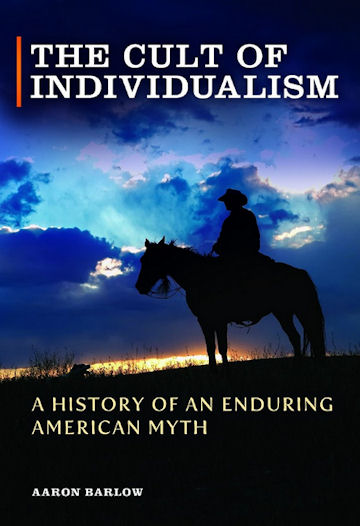
Book review: The Cult of Individualism: A History of an Enduring American Myth by Aaron Barlow

I may be the worst person in the world to review a book about personal political beliefs.CultOI-CVR
Since 2001, I’ve been on a news fast.
No newspaper, no radio, no online news, I don’t even watch the local news on television.
For me, there is no news — it’s all history.
My interest in politics began to wane on November 22, 1963.
It never recovered.
I’m one of those who believe that voting is a waste of time because the top one per-cent of the one-percenters controls everything. Dare we call it conspiracy?

Some of my ilk believe that we’ve been screwed since the income tax passed during Woodrow Wilson’s watch. My generation has never seen a year go by that our military wasn’t engaged in either a war, skirmish, conflict, whatever. Our military always has someone in harm’s way.

On second thought, I may be the ideal reviewer for this book.
I believe we still have a chance.
But, in order to avail ourselves of that chance, we have to bridge the chasm between the increasingly polarized opposing ends of the political debate.
Yes, I’m an optimist. Maybe I’m an anachronism. Maybe I’m wrong.
Maybe it’s too late. I hope not.

In the Godfather-Part 2, Michael Corleone said, “keep your friends close but your enemies closer.” It’s good advice for anyone interested in politics. If you don’t know why your opponent believes what he does, how can you understand him? How do we build a bridge across that great divide? We must create a path to the point where the bridge can be built.

A path is formed by laying one stone at a time. Aaron Barlow has given us an important stone to lay. In his most recent book, The Cult of Individualism: A History of an Enduring American Myth, Barlow offers readers an unbiased examination of the root causes of America’s retreat from reason, understanding, and acceptance in dealing with our political adversaries. Too many people have, for too long, taken the easy way out and cast inflammatory remarks across the aisle and turned a cold shoulder towards the opposition. Who is the opposition?

Barlow takes a new look at identifying the contestants. Rather than the more commonly considered North-South divide, he looks at what he considers a neglected force, East-West.
Consider the contrast in what he labels the “secular-liberal East coast elitists” with the rugged, self-reliant explorers who moved the boundaries of the country Westward. Furthermore, his research makes a solid case for his argument that today’s political movements (and their resulting divides) are based in cultural roots as much as current events and environmental factors.

What do Andy Taylor, Jed Clampitt, and Daniel Boone have to do with today’s Tea Party?
What is the cult and also the myth referred to in the title?
How does “individualism” relate to “anarchy?”
Which ethnic group can be derided at will anywhere in this politically correct country with no negative consequences?

William Safire asked in his book, Freedom, “How much individual freedom are we willing to give up in order to say we live in a free country?” Conversely, Barlow asks, “How much of our personal accomplishments are we willing to admit come from submerged support of family or government in order to claim we ‘did it on our own?’”

Barlow, who describes himself on FaceBook as “very liberal” and I (FB description “apolitical inactivist”) have something in common. We both believe it can be done.

If enough of us reach out to the other side, walk the path, and build the bridge, perhaps one day, rather than send vitriolic epithets to those who think differently, we can join forces and deplore those who refuse to be open to understanding others.

What the shooter knows before squeezing the trigger.

Group Dynamics crowdTravis Bickle lurks just a few rows from where the President is shaking hands with the crowd.
Twenty yards away, Squeaky Fromme waits with the patience of a tortoise.
John Hinckley is an adolescent who observes every movement.
A select detail of Secret Service Agents execute their duties to perfection.
The President works the crowd and departs the airport unharmed in his limousine, “The Beast.”

From her hotel room on the forty-second floor, Claudia Barry lowered her binoculars, smiled, and thought to herself, I could have choreographed that entire scene.

Her confidence in doing so comes from the fact that she was the first person to earn a (fictitious) masters degree in group dynamics from LSU (or anywhere else for that matter.)

The study of a system of behaviors and psychological processes which occur within a social group, or between social groups and individuals within and/or outside of either, is group dynamics. An in-depth understanding of these interactions coupled with knowledge of the subject individual will assist observers in predicting the subject’s movements and response to the movement of others. Such facts as the subject’s personality profile and handedness are key elements to anticipate reactions as well. (How many U.S. Presidents were left-handed?)

Ms. Barry earned an undergraduate degree in sociology with a minor in psychology from the University of Arkansas. She learned to shoot from her grandfather who was a retired motorcycle repairman (a subtle reference to Zen) and had enjoyed watching the movement of animals in the woods. She attended numerous church services, political cocktail parties, and trials to study the way humans moved in response to others. She took private dance lessons and applied what she learned while moving through crowded subway stations and common areas. Mardis Gras parades were a favorite for personal challenges.
How close can I get to the mayor?
Can I shake hands with the grand marshall on the parade route?
She interviewed street performers and scrutinized every move they made, especially as they interacted with the impromptu audiences.
To add legitimacy to her project and to mask her unconscionable motive, she titled her thesis paper, Security in Space: The dynamics and challenges of providing personal security in high risk environments.

The Presidents Club

My second novel, The Presidents Club, will be officially released on Amazon Tuesday, Nov. 19.
It will be available as an e-book for Kindle and soon will be available for Nook.
Already seeing some reviews coming in.ThePresidentsClubFinal2 Watch for a blog soon on how the series title was selected.
Since it features characters from both my first two books, I’m going with, “The Barry-Hixon Conspiracy.”

To support the Tuesday release, my blog this weekend in the Weekend Writing Warriors blog hop showcases

eight sentences from TPC.

“For Whom Did You Last Vote” can be found HERE.

Rebels on the Mountain by Jack Durish — Book Review

Friday, November 8, 2013 marks the debut of a new website, The Fussy Librarian. They will routinely send out e-mails to thousands of subscribers with recommendations for books in the subscriber’s chosen genre(s).
Included in their first mailing is my book, The Tourist Killer.
Also, in their initial offering is a book I reviewed a while back, Rebels on the Mountain, by Jack Durish. My review follows:

It’s hard to imagine investing the time to read Gone With The Wind on a Kindle. I wouldn’t have done it. Add about five or six hundred pages to Jack Durish’sfirst novel, Rebels on the Mountain, and you’d have a Cuban version of Margaret Mitchell’s venerable classic.

Fortunately for readers, Durish kept his book to a more manageable size without losing the thrills of the action in the Castro/Cuban revolution nor the emotions of a mixed race love story. The author also placed appropriate translations for Cubano and Spanish to English. The only Spanish sentence I can recite from high school is “el tocadiscos esta descompuesto,” the record player is broken. That bit of Spanish has really come in handy over the years.

When we first meet Nick Andrews, he is about to pilot a yacht from mainland U.S.A. to Cuba for some friends. His friends are setting up a medical clinic in Cuba and Nick claims he’s on an extended leave of absence from his unit in the U.S.Army. Later, we learn that Andrews is a decorated war hero (Korea), an Airborne Ranger, and probably working with/for the C.I.A. He definitely has his finger on the pulse of both Cuba and Castro. At the same time, both he and his love interest confidently and continuously pursue each other.

A well written historical novel, Rebels On The Mountain has lots to offer readers. We learn details of the Batista regime and life as his minions lived it and the changes the people expected from new leadership (Castro). Durish takes us into the rebel training camps and private meetings with the Fidelistas. We meet the future dictator himself as well as his brother, Raul, and the notorious Che Guevara. It’s interesting that the man behind the iconic image of revolution and change turns out to be a ruthless murderer who was openly racist towards any and all Americans. In the end, Che fell from favor with Castro and became a victim of the ruthlessness that made him famous.

Durish writes with the confidence of someone that has earned the right to speak. He served in Viet Nam and has shown himself to be a meticulous researcher. When it comes to storytelling, Durish can deliver the letter to Garcia as well as Lieutenant Rowan.

Rebels On The Mountain is available from the publisher, Venture Galleries, and from Amazon.Rebels on the Mtn CVR

Writing — as a second language?

“You see what I’m saying?”

“No, I hear what you are saying. I cannot see it.”

Does that conversation sound familiar?

Have you been tempted to respond that way when someone asks if you can see what they are saying?

Has an author ever given you a plot that you could see?

Have you ever told a story and your listeners responded favorably?

Ever notice how good the story was when you had good listeners?

The story got even better when the listeners were better.

Was their response so favorable, that you decided to put that same story into writing?

How long did it take to reduce a two minute story to print?

Whether you were writing longhand or typing, it’s highly likely that it took much longer to write the same story that previously was available only verbally.

Ever wonder why?

Donald Davis has.

He wondered so much about it he did lots of research.

His research focused on teaching non-writers how to write.

Just as Betty Edwards has shown that willing students can learn to draw (and draw well), Davis asserts that non-writers can be taught to become accomplished authors.

Here’s another conversation you’ve probably had:

 “Don’t ask Janice what time it is.”

 “Why not?” is the reply.

 “She’ll spend an hour telling you how the clock works and you’ll never find out the time.”

The trait of being a great storyteller doesn’t give you a free pass on becoming a great writer. In Writing as a Second Language, Davis details the five-step transition of the spoken word (stories) into print. He defines and reviews the development of language. In this case, to become better purveyors of the written word, practitioners are well-served by knowing how the clock works. It saves time.Image

Davis reveals the logic behind the title as he explains that writing, like learning a foreign language, is a skill the student learns.  Few of us are born “natural” writers. For the rest of us, we can rely on Davis’s five-step (thank God it isn’t twelve steps) plan to become a better writer.

No doubt, some writers have been employing Davis’s recommendations for years unconsciously.

Now we can all become better writers, on purpose.

“You hear what I’m writing?”

New Release: Life Sentence, Romantic Suspense by @Carolyn_Arnold

Carolyn Arnold’s new suspense romance

“If I pay with my life, you will pay with yours.”

Defense Attorney Bryan Lexan may have just taken on the case which will cost him his life.

When his client, a Russian mafia boss, is convicted of first-degree murder, he vows to make

Bryan pay.

Meanwhile, Jessica Pratt has always prided herself on being a modern woman–you know, the

kind who doesn’t need a man to make her feel complete. So when she finds herself torn between

two, she realizes that not all decisions are based on facts. If they were, her boyfriend, Bryan,

would be the logical choice. He has the family name, wealth, and a stake in a successful law

firm. Only thing is, when she meets Mason Freeman, the chemistry between them is irrefutable

and he won’t take no for an answer.

With both of them caught up in a struggle for survival, and a powerful enemy on their heels,

they’ll need to decide where their loyalties lie.

“Carolyn Arnold…continues the trend of writing exciting stories that keep your attention

throughout…Life Sentence is a thriller all the way…Arnold never disappoints.”

—Barb, The Reading Cafe

“Though unique in her own right, author Carolyn Arnold is a masterful blend of such greats as

Shirley Jackson (horror), Joseph Finder (thrills), and Janet Evanovich (humor and romance).

Life Sentence is powerful and gripping, with so many twists and turns it left me gasping…”

—Betty Dravis, Award-winning Author and Journalist

Get your copy now at one of these fine retailers.
Available in E-Book or Print formats.

Amazon: http://ow.ly/nRPGv

Barnes & Noble: http://www.barnesandnoble.com/w/life-sentence-carolyn-arnold/1116264581?ean=2940045163378

Apple: https://itunes.apple.com/us/book/life-sentence/id680955711?mt=11

Kobo: http://store.kobobooks.com/en-ca/books/life-sentence-6/_KEFRefcEkShHh0D6wVlUw

Smashwords: https://www.smashwords.com/books/view/341307

CAROLYN ARNOLD’s writing career was born when a co-worker said “tell me a story”.

From there what had started off as a few paragraphs grew into her first length novel—LIFE

SENTENCE. Her writing has been compared to New York Times Bestsellers such as JD Robb,

Mary Higgins Clark, Sue Grafton, Michael Connelly, Tess Gerritsen, and more. She is the

author of the best-selling Madison Knight series, and Brandon Fisher FBI series. Carolyn was

born in 1976 in Picton, Ontario but currently lives in southwestern Ontario with her husband and

two beagles.

Connect with Carolyn online:

Website: http://carolynarnold.net/

Twitter: https://twitter.com/Carolyn_Arnold

Facebook Fan Page: https://www.facebook.com/carolyn.arnold.564/about

Zen and the Art of Assassination

“I’ll be with you in a moment,” the sales clerk said with a nod.

“When?” I replied.

“In just a moment.”

“Which moment?”

“The moment I finish with this customer.”

“‘The’ moment?”

“Zen.”                                        

“No, I’m Methodist.”

“I attend the Center for Thought Control.”

“What is that?”

“What is zen?”

A few years ago, I reviewed a book that deals with the connection of photography and zen.  Prior to reading Zen and the Magic of Photography by Wayne Rowe, I had no understanding of zen.

I’d heard of it.

I’m a baby boomer.

Because of the Beatles I’d heard of transcendental meditation.

Most references to “zen” had also included “Buddhism” or “Buddhist.”

The years of my youth did not include the initiative to seek out nor investigate other beliefs or thought systems. Such an attitude often breeds a lack of understanding.  It’s easy to see the tip of an iceberg, make up a story to explain it, and proceed as if that concoction was the truth.

Now, we’re at the personalized, customized reality part.

“Oh, that’s her reality.”

“For him, that’s the way life is — his world view.”

“Honey, did you take your lithium this morning?”

It was a very interesting and satisfying discovery to find out that zen isn’t what I thought it was.

A simple definition of zen is “meditation”. Wikipedia says this of meditation: ” a holistic discipline by which the practitioner attempts to get beyond the reflexive, ‘thinking’ mind into a deeper state of relaxation or awareness.” Being “in the moment” can apply to anything from motorcycle maintenance to religion to photography — to murder.

A character in my first novel practices zen.

She gets into the moment.

She becomes “one” with her weapon, the bullet, and the target.

It’s kinda like zen and archery, only with a gun and live ammunition.

Meet Claudia Barry, a sixty-two year old woman contemplating retirement.

A baby boomer.

She’s a knockout.

She’s an elite professional assassin who has mastered the art of disguise.

A cousin, a photographer, introduced her to Zen.

Her grandfather was a motorcycle repairman.

Now, she practices Zen — with every squeeze of the trigger.