The Seven Things (about my writing) Challenge

7

Recently, a couple of my author friends tagged me in a writing project. The assignment: post seven things about your writing.

1. My writing is done at a standing desk.

2. When I start a book, the first and last chapters are written first.

3.  I do not use an outline.TouristKillerNewCover-LRG

4.  In the beginning, notes are made on main and significant characters. As the writing continues, the characters grow and change and take on their own identities and display their strengths and weaknesses.

5.  My plan is to avoid the “dark and stormy night” syndrome. Establish the setting with a few brief sentences, then let the characters tell the story in dialog. Not fond of the omniscient narrator. Instead of writing that the elderly lady sang off key, I bring out the old woman and let her sing.

6.  I read a lot of old books, take notes, then use them for inspiration and ideas in my books.

7.  I enjoy writing dialog. I get into character for each speaker. My dialog has received critical praise. I believe I do good with it because I’m a good listener. My wife says it’s because I talk a lot.

PresidentsClub-new covr 2-8-15

BONUS: I write for the same reason many readers read—escape. My characters are the voices in my head and I enjoy spending time with these people.

FIND OUT seven special things about the writing of Charley Descoteaux and Jeff Tsuruoka

The Art of the Image–guest blogger, Dan Gregory, RPh

"Fire in the sky" Copyright Dan Gregory used with permission

“Fire in the sky” Copyright Dan Gregory
used with permission

This week, we welcome retired pharmacist, Dan Gregory as our guest blogger. 99755-guest2bblog-2

He was born and raised in Louisiana. His interest in photography and painting blossomed in his teenage years, continued through his era of earning a pharmacy degree from Northeastern University in Monroe, Louisiana. He routinely practiced pharmacy until his affliction from MS became apparent in his fifties. He retired and now devotes his full attention to photography, writing, and oil painting.
What many would consider a handicap he has turned into the realization of a dream: full time attention to his visual arts and the expression of it. He currently resides in Lakewood Ranch/ Sarasota, Florida where he is happy with camera, pen, and brush in hand. He sees the world through new eyes. His renderings are sought by collectors through out the United States
and world, and he is the proud father of two sons, and a daughter.
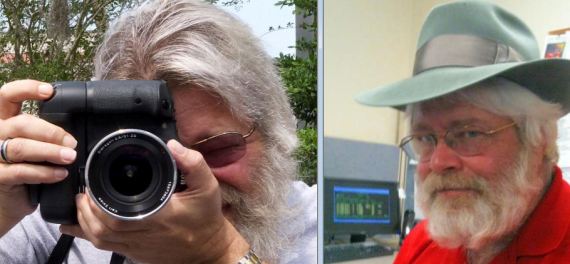
Dans Head shots

Dan presents his thoughts on how and why he merges photography and oil painting.

=============================================================
The world is quite the wonderful and startling place; discoveries are everywhere with infinite possibilities. All you have to do is open your eyes.
But for some just to see is not enough. Time must be frozen. But how to do that? Again in a myriad of ways, some more complex but satisfying through the magic of accomplishment.
I’m a retired pharmacist, not by choice, but thanks to Multiple Sclerosis, so I have all the time in the world now to discover it.
I’ve always painted since a child, almost always been a photographer from back in the days when everything was manual. I bought a Leica because it’s such an incredible tool to take photos that beg to be translated into paintings, not because I’m a snob. After several months with it, it FORCES me to arrange and compose artistically, unlike my other cameras which have
whittled photography into point and shoots. I’m still learning it, and it never fails to surprise or disappoint me. Much the same as life.
I like to travel the backroads with it, the blue highways so to speak. Here I can find the dichotomies between the past and present. There’s an abandoned motel, truck graveyards hiding in the tall weeds, archaic old general stores. Strange sites as compared to the glass and steel so commonplace today, the hurried pace. They scream in anguish to be remembered, for
once they stood proud and strong, rolled the roads in hubris. And now they just want to be thought of one final time.
And I have that power. Through my viewfinder I carefully compose my trophy within the lines of a grid. I bring the LEDs to a correct exposure, let the auto-focus do its thing by lightly depressing the shutter release. Then I press it all the way. The capture is complete; I have rendered my prey timeless, and, like magic, it is given immortality.
I like to photograph the serene beauty of the female form with it. From the release of that button, a woman who strives not to age will never do so. In decades to come, when the flesh has dried and withered, an ever-young face will stare from that screen or piece of paper. She will always be there, back when she had the power to enchant a man just with a coy smile which has vanished like a ghost. She has gained the prize of forever. And she will never lose it.

Copyright Dan Gregory

Copyright Dan Gregory

The photographs are good, but there is something better. The photographs are recordings which require no interpretation. Physics is physics. They can be personalized a bit with Photoshop or some such program. But more than anything it just depends on how the light strikes the sensor. The quality of a photo depends on the compositional and functional talent of
the photographer.
And what is something better you may ask? I take those images, and I interpret them in paints. I take tubes of pigments made from earth and draw forth from a blank, white canvas the colors of the rainbow. I paint those relics, those graceful women. If the camera gave them a new life, the painting gives them a new interpretation. I am scarcely limited, if only by my imagination. All creatures of mythology, past and present, can be rendered and brought to glorious life. The dead can be brought back to life, the divided reunited .The camera, the Leica, cannot do that. The elegant woman can still be captured by the unfeeling sensor, but it takes the pigments to give her the touch of the artist’s soul. He can see every mark, every crease, on that woman’s body, and he can love them because they are part of her uniqueness. He can appreciate that she is a child of God and render her as such. The camera cannot do that. It is merely a tool. It is like saying the painting exists solely because of the brush, no matter how fine.
The artist can return life to the abandoned building beside the unremembered road. A forgotten store that has seen many decades between the dark and light is suddenly ablaze once more. The song of crickets is replaced by the cries of merriment. The dead have been redeemed. The moon and stars above have seen it all since time began, but like the alloy and glass of a camera they are uncaring. They are not human.
But the camera and the brush are both only tools wielded by a human. A cheap Instamatic wielded by Ansel Adams can hardly be bested by a child with a Zeiss Ikon. A Waterhouse rendered by a cheap dime-store set of pan watercolors can hardly be surpassed by a child with all of the finest Winsor and Newtons in the world. Experience is the best, and harshest, teacher. So it is up to you to embrace it. Go into a world wracked by strife and wars, and cherish all of what you see there. It all exists for a reason, and it is up to you to find the latent beauty that lurks everywhere.

And it is up to you to show it, display it, and better yet, teach it.

ENDEAVOR

Our guest blogger this week is Rev. Bruce McGee of Louisiana.
He was born in Lenoir, NC, 1943 and reared in West Monroe, LA.
He graduated University of Louisiana at Monroe 1974(the same year as me–only then it was N.L.U.)
Studied MBA 1978-1981 and surrendered to pastoral ministry 1981.
Retired from pastoral ministry 2006 and is now preaching supply and revivals.
Welcome, Brother Bruce!
============================

Bruce McGee's avatarBrucemcgee43blog's Blog

Many years ago, when I was in training at Keesler AFB, we had exercise time each morning.
We had to complete 4 exercises and run a mile in under 15 min.
For most of us, it was relatively easy.
I was finished in under 9 minutes each day.

However, there was ONE man who beat me on the mile run EVERY day!
Finally, on the last day, I determined to outrun him.
I strained with every nerve.
Just as we finished the 3rd lap, I put all I had into it!
And, I crossed the finished line about 5 yards ahead of him!
I walked over to my Captain and said, “I DID it!”

Then I passed out!
_____________________________________________________________
_________SCRIPTURE_________________________________________

Eph 4:1-3
1 I therefore, the prisoner of the Lord, beseech you that ye walk worthy of the vocation wherewith ye are called,
2 With all lowliness and meekness, with…

View original post 185 more words

Desert Nomadic Values and Religion—Guest Blogger, Andre Le Gallo

99755-guest2bblog-2 My guest blogger this week is author and retired CIA officer, Andre Le Gallo.

He studied the Middle East at The School of Advanced International Studies at Johns Hopkins and lived in Muslim countries. We have reviewed all three of his books on the Middle East: The Caliphate, Satan’s Spy, and The Red Cell.

Readers of this column know we don’t follow the news. However, it was hard to miss exposure to Bill Maher’s recent comment about terrorism when he referenced so many bad apples demanded an examination of the orchard(at the 3:13 point in the video). Killing in the name of religion isn’t good for anyone. Christianity and Judaism can both be

Andre Le Gallo

Andre Le Gallo

criticized for imposition of outdated traditions on their members today although we’re not aware that either endorse homicide or human sacrifice in the 21st Century. There is definitely a need to be selective about which of the ancient values to observe today.

Therefore, it seems relevant to hear from a man who has earned the right to speak on the topic.

Welcome, Andre!

===========================================================================

The discussions on Islam generally miss the point that it is not, strictly speaking, a religion any more than the iPhone is just a means to call your mother. Unlike Christian religions which focus on the individual’s belief in and relationship to God, Islam is a complete package governing every aspect of life on earth.

Islam set itself up as a new and improved version of the two previous monotheistic religions, Judaism and Christianity, whose prophets Islam folded into its own traditions. Islam acknowledged the previous two religions as foundation stones but also claimed that they had been superseded by the latest revelations. If Judaism was the 1.0 version and Christianity the 2.0 version, then Islam was supposed to be the new and improved 3.0 version. The other two were obsolete and no longer supported by God.

It is noteworthy that the Prophet was not only a religious leader; he was also a warrior, a merchant, an administrator, a judge, and a diplomat. An Islamic Republic is a state governed ultimately by “experts” who claim to represent God’s will. Governing with and through man-made laws is not part of the Islamist vision. In his book, What Went Wrong, Bernard Lewis recounts how early Muslim diplomats to Europe felt nothing but pity for countries that had to rely on their constitutions and statutes, all written by men, when they had Holy Law direct from God. Unlike Christianity’s now well-established principle separating religion from government, as in “Give to Caesar what is Caesar’s and to God what is God’s”, Islam draws no separation between the two. This is not to say that Christianity’s path was without martyrdom, usually caused by others unlike the current Muslim experience, and violence. However, it evolved through the Reformation and the Enlightenment two hundred years later. Since the Islamists’ credo is that their religion’s core value is the eternal truth of the revelations contained in the Quran, the path to changes and adjustments, other than to cut out all changes to Islam’s original values, faces an internal roadblock.

Islam’s true believers are not content with simply worshiping Allah and leaving others to worship in their own way. Their intent is to spread their beliefs to all walks of life from justice to finances to equal rights for all.

A set of values compatible with seventh century desert nomads is irreconcilable with Western democracies of the 21st century.

Le Gallo's books are available on Amazon.

Le Gallo’s books are available on Amazon.

Driving in a trance

The Eight Sentences:(Well, nine, I rarely go over the limit. Maybe the moderators will be tolerant.)

“It’s a somnambulistic trance,” blurted Barger.

Dryden spoke up, “Where did that come from? First you reported  the sheriff getting murdered and then all of a sudden you hit us with one of your big-ass words.”

“Well it isn’t that big of a word. I’ve heard of it,” said White.Sleep Walking

“And the sheriff didn’t get murdered anyway. It was the police chief and Barger said he bought it in a shootout,” said Scully.

Dryden replied, “It sure as hell sounded like one of his Tourette moments to me.”

Barger was ready to rejoin the fray, “You’re both correct. It was one of my moments but it wasn’t something out of Mrs. Byrne’s Dictionary. A somnambulistic trance is like when you’re driving down the freeway in complete control of your vehicle and aware of everything around you, but your thoughts are elsewhere–didn’t you ever drive right past your exit that you’ve taken for years?”

========================================================

The Setup:

From Chapter Twenty-two my my current serial novel, A Year Without Killing. In this scene, members of the League of Old Men are talking. Hawk Barger’s “condition” has just shown itself. This was introduced in a previous chapter and snippet. He suffers from acquired savant syndrome and often comes out with unusual words at the most inopportune times. In this case, I wrote this scene to immediately follow a scene at the end of the previous chapter in which Star Braun experiences the trance to which Barger makes reference.

NOTE: Mrs. Byrne’s Dictionary will be the subject of a future blog.

========================================================

Share your own EIGHT with us!

oin us here at Weekend Writing Warriors.The  same link will take you to the work of dozens of talented writers. For a treat, please check out their work, too.

Many of the contributors to Weekend Writing Warriors alsoSundaySnip

“Backwards” writing turns me off

904b8-aaa-www

The Eight Sentences:

Sentence structure is a matter of style–every writer has his/her own–and no one is required to like it.

Frequency of use and the authors’ reputations don’t guarantee a pleasurable read.

If you do like a particular author’s style, it stands to reason, you’ll read more of their work.

Does annoying sentence construction take you out of the story?Hat-2-sml

Many of the examples of backward writing that I find most annoying include adverbs and “ing” verbs, both of which only serve to add to my displeasure. Some folks think this style of writing and sentence construction is fine. Apparently, it’s preferred in English class themes. My editor agrees with me in that it has no place in novels where active writing works better.

Where did that come from?

I recently wrote a blog about one of my pet peeves in writing (I only have about 5,280 pet peeves). My intention was to speak from a reader’s point of view. Every reader has her/his own preferences as do editors and authors. I claim no authority to speak from a position of wisdom on this subject, but I do know what I like and dislike as a reader. The entire article can be found HERE.

Share your own EIGHT with us!

oin us here at Weekend Writing Warriors.The  same link will take you to the work of dozens of talented writers. For a treat, please check out their work, too.

Many of the contributors to Weekend Writing Warriors alsoSundaySnip

participate in the Snippet Sunday group on Facebook.

Changes in Healthcare Delivery are Dangerous to Your Health

Pharmacy student, James Herbert joins us today.

Pharmacy student, James Herbert joins us today.

Our guest blogger this week is James Herbert, a Pharm D Student at South College School of Pharmacy, Knoxville, TN. He is a Husband, Father, Doctor Who fan, science fiction fan, philosophy-theology aficionado, and ex-IT guy with dreams of using informatics and technology to enhance pharmacy’s role in improving patients lives. He says, “I’m just a regular guy livin’ the dream because in the end aren’t we all?”

His topic addresses a situation begun decades ago and is now coming to a head. We introduced this subject last week with an article regarding the re-branding of patients to customers. Herbert believes there’s more to it than just semantics.

=================================================================================================

James Herbert

James Herbert

A paradigm shift in healthcare begun years ago, speeds toward the downgrade of the patient to a statistical economic construct.
Patients are now being referred to as customers.
This is a dangerous shift that moves the focus of the patient’s medical needs towards the consumption of goods and services. Consumption of services does not require the relationship between patient and healthcare provider necessary for patient care. The purpose of healthcare is to provide appropriate care to patients. This shift away from the fundamental principle of personal attention is detrimental to the public health.
“Customer” is an economic term: A party that receives or consumes products (goods or services) and has the ability to choose between different products and suppliers.1 A patient is a person who has a medical need. In times of an emergency a patient does not have the luxury of choosing who provides their care. In cases of extreme emergency they have no say what so ever. Patients do not consume the “goods” and “services” of healthcare in the same way they would in a traditional retail environment. You will not see patients lined up at a hospital door on black Friday for example.
Dorland’s Medical Dictionary (2008) defines patient care as the services rendered by members of the health profession and non-professionals under their supervision for the benefit of the patient
Taking care of customers is commonly called customer service. “Customer service is a series of activates designed to enhance the level of customer satisfaction –that is, the feeling that a product or service has met the customer expectation.”2
Customer satisfaction is measured by the satisfaction survey. Here is where the disconnect begins
A survey, by its very nature, limits itself to the chosen parameters. That is to say that there are “buckets” that are being weighed as they are “checked off” in the survey. It is in this way that the customer is reduced to a set of statistics. In surveys, the person is irrelevant, it is the data that is important. Chosen members of management chose the parameters.
Data identifies trends and trends can be impacted by a series of scripted efforts. These efforts are called metrics. Metrics reduce customer service to a series of equations. CVS uses Triple S and KPM metrics3 in order to quantify and improve service performance. Customer expectations can be manipulated in scripted measures. Sitting down with a customer influences their perception of the amount of time spent with them4. Adding key words or phrases to encourage additional purchases is another scripted method of providing customer service (See CVS Pharmacy Business Metrics Paper)
Pharmacy may be measured by its Triple S and KPM or similar metrics but for hospitals to be reimbursed for providing care to those with Medicare/Medicaid, HCAHPS is the golden standard. Press Ganey is the leading provider of patient satisfaction surveys designed to help meet the HCAHPS requirements.

The manipulation of satisfaction scores may have nothing to do with providing safe and ethical healthcare. In one case a physician was able to achieve a 7% improvement in his satisfaction scores by prescribing an antibiotic to all his patients who complained of a cough, sore throat or sinus headache5. Managing low scores can lead physicians to prescribe powerful opiates for toothaches6. Healthcare professionals under pressure to meet metrics, forego patient care to perform customer service. The result is that most satisfied patients tend to be those who have higher healthcare cost, drug expenses, and most shockingly, have higher deaths rates than those who do not feel satisfied with their care7. The customer purchases their “good” but they may not get care for their health.
The retail pharmacy chain is the end game when customer service once and for all trumps patient care. In the retail setting, “wait times”, scripts per hour, and profit margins are king7. The pharmacist as healthcare provider is no longer part of the business model. Overwhelmed with hundreds if not thousands of script per day and skeleton staffing the pharmacist’s role is reduced to that of a dispensing machine. The result is they are not perceived as healthcare professionals. One woman demanded: “Please just do your jobs and fill what you see and stop trying to make yourself something you are not”9. In retail chain pharmacy healthcare is not important. Customer service is. Customer service quantified by metrics.
When results are all that mater then there is no “person” behind the customer or patient. They have been dehumanized. All that is left is the data. People do not get treatment. Data gets manipulated. Customers are not getting service. Data gets manipulated. When all that matters is the data, then the ends justifies the means. Metrics and surveys, by their very nature, dehumanize people.
The future of healthcare is freighting if the focus does not turn back to personal patient care. A therapeutic relationship addressing a patient’s medical need with personal and individual care, trust, and understanding. This includes a healthcare provider who has a specialized set of knowledge and skills that are not available on website, a television ad, or a talk show.
When raw, sterile numbers take precedent over warm flesh, people are no longer in the equation.


Without people there is neither health–nor care.

==================================================================================================

References:

# http://www.businessdictionary.com/definition/customer.html
# Turban, Efraim (2002). Electronic Commerce: A Managerial Perspective. Prentice Hall. ISBN 0-13-185461-5.
# CVS Pharmacy Business Metrics: http://s3.documentcloud.org/documents/472510/250510-rx-tg.pdf
# Simple tips to improve patient satisfaction http://www.medscape.com/viewarticle/743875?src=mp&spon=25#vp_2
# Patient Satisfaction is Overrated: http://www.medscape.com/viewarticle/821288
# Why rating your doctor is bad for your health: http://www.forbes.com/sites/kaifalkenberg/2013/01/02/why-rating-your-doctor-is-bad-for-your-health/
# Patient satisfaction linked to higher health-care expenses and mortality http://www.ucdmc.ucdavis.edu/publish/news/newsroom/6223
# Pharmacists: Corporate greed putting patients at risk http://www.khou.com/story/news/investigations/2014/11/06/iteam-prescription-errors/18591573/
# LETTER: Pharmacists aren’t doctors http://www.courierpostonline.com/story/opinion/readers/2014/11/17/letter-pharmacists-doctors/19044977/

The Customer May Always be Right, But the Patient Is Not

Last week a new acquaintance asked me what I do for a living. My reply, “I spend my day telling people things they don’t want to hear. I’m a pharmacist and I deliver the news that  “your co-pay is much higher than you expected,” “your insurance company requires a prior authorization,” “your prescription was out of refills and your doctor has not responded to our request for a new prescription.” The list of examples goes on and on, but these are by far the most common.  People have high expectations of me and my department to make sure they leave the store happy and on the road to recovery from the ailment that brought them into the store.

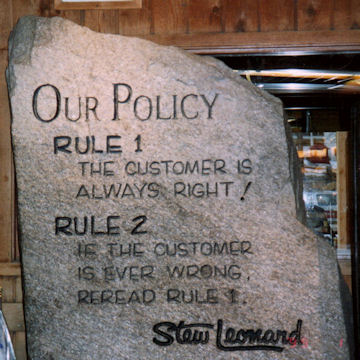
Stew Leonard owns one of the most successful grocery stores in the world. Does his policy work in every situation?

Stew Leonard owns one of the most successful grocery stores in the world. Does his policy work in every situation?

Years ago, a syndicated columnist stated in no uncertain terms “The customer is NOT always right.” The article continued with the author’s evidence to support the claim. In retail sales, the age old standard is a difficult hurdle to overcome. In pharmacy it’s almost impossible. Once a shopper complains to a member of management outside the pharmacy, it’s a sure bet the manager will side with the customer—unless it’s a patient requesting something the pharmacist is prohibited from doing either by law or regulation. The distinction of roles they play once they enter the portal of a retail pharmacy is blurred. Sometimes, the clarity of a sharp focus is never achieved.

A simultaneous reference(customer/patient) to the people who shop in stores that contain a pharmacy became noticeable back in the 1970’s.  Was this duality the precursor to changes we see in the perception of consumers today? Are these shoppers  customers or patients—or both?

This labeling of shoppers took on more prominence with the rise in popularity of chain drug stores in the late twentieth century.

When pharmacists (usually independents) began leasing space for a pharmacy inside department or discount stores (such as Walmart’s precursors like “Gibson Wholesale”) the change  in,  shopping nomenclature picked up speed as well as consumer awareness of the trend.

Pharmacies are now being paid for talking to patients.

Pharmacies are now being paid for talking to patients.

Contemporary retail practice settings such as a prescription department in a grocery store or Walmart, continue that same tradition with shoppers being both customers and patients. I worked for Walmart for 7 years and by the time I left, we had to document counselling encounters in the computer—yet another conversion of a patient to a number.

Another significant event in the change in perception of shoppers was the influx of non-pharmacists into upper level management of both hospitals and chains. [Historical note: Eckerd Drugs (which no longer exists) had a chain of command of pharmacists supervising pharmacists from store level all the way up to the highest echelons of corporate management. The Sr. VP of Pharmacy reported directly to the CEO. Non-pharmacist management types could influence pharmacy only via him. Those days are gone with the wind. By contrast, the top pharmacy position at Walmart is a medical doctor(or was a few years ago.) ]

Retail pharmacists are now required by law to offer to counsel patients on new prescriptions. The requirement comes not from a concern for customer service, but from the government wanting patients who received government funded medication to use it correctly. Uncle Sam wants the most bang for his buck. Insurance companies now reimburse pharmacists for these same “cognitive services.”

Simply stated, insurance companies want pharmacists to talk to their beneficiaries and, just like our Uncle, get the most bang for their buck.

Many pharmacists complain that the reimbursement is not commensurate with the time involved. Many patients don’t want these extra services. They just want their prescription so they can get home, eat supper, and watch television. Perhaps they don’t mind being just another number. Such a mindset could be dangerous to their health.

Whether they consider themselves customers or patients, the shoppers I serve have one thing in common;

they’re all on drugs.

Has the game left me behind?

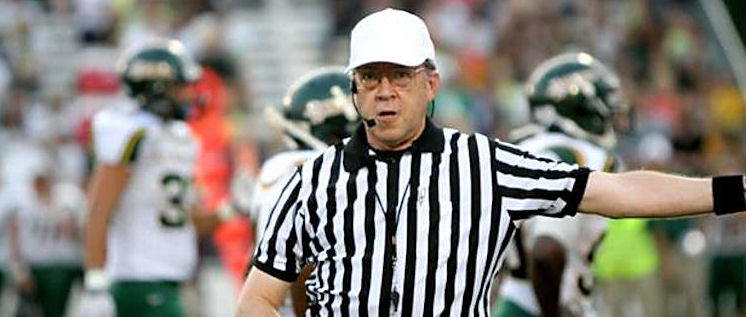
Signalling a penalty in Sept. 2011.

Signalling a penalty in Sept. 2011.

At the end of the 2012 football season, I retired as a high school football official after sixteen seasons. In retrospect, it was a good decision.

The stars of tomorrow. Do they have to start so young?

The stars of tomorrow. Do they have to start so young?

As a spectator, I lost interest in professional sports almost twenty years ago. Now I’m concerned about the state of college level sports and the influence it has on high school sports. How far does the influence reach?  Is there a level of sports, especially football, that is unblemished?

Acting on the premise that others may share my concerns, I turned to long time coach and official, Joe Sturniolo. We met online in a forum for officials. His comments and opinions have inspired, consoled, and entertained the members of our group for several years.

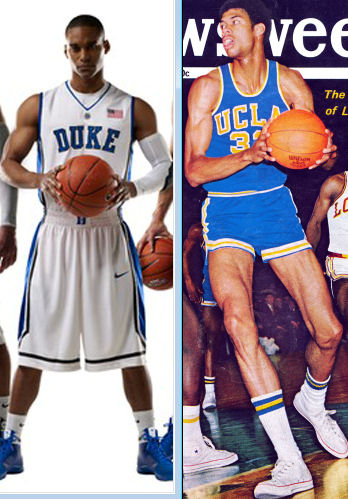
I didn't realize just how much the uniforms had changed!

I didn’t realize just how much the uniforms had changed!

This weekend, I begin a series of blogs to work out my thoughts on football, sports, and their places in my life. My interview with Coach Sturniolo is presented in two parts. Today is part one, conclusion is tomorrow.

Here’s a preview of one of the questions. Coach Sturno’s answer is thought provoking.

FCEtier: Overheard last week in a sports bar, “I lost interest in basketball when the men’s shorts got longer than the women’s.”

Your reaction?

For part one of the interview, including his answer to the above question, please click HERE.

Skulls and Bones

Find us on FaceBook.

Find us on FaceBook.

The Eight Sentences:

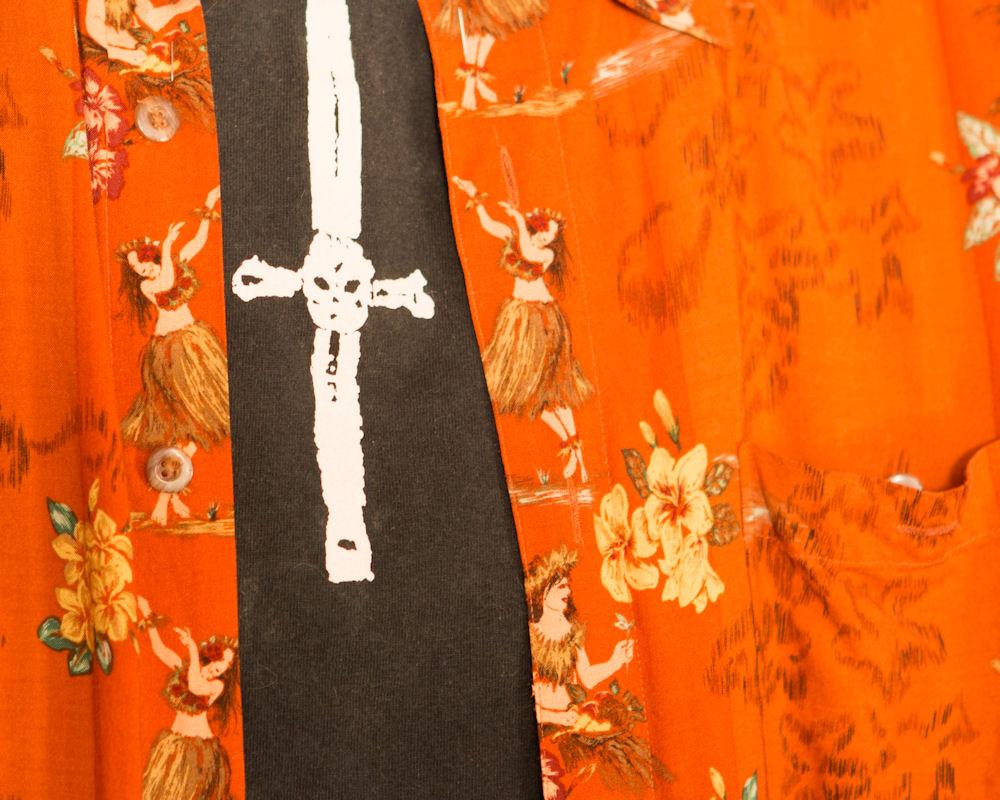
Hula girls and a skull dagger.

Hula girls and a skull dagger.

Claudia asked, “What’s up with the choice of shirts?”
“The dagger bothers you?” asked Debert.
“I’m not sure…” she hesitated wondering what Debert was up to. “Is he mocking me—or is this some dark metaphor?” she asked herself.
Debert assumed a dignified frown, lowered his eyebrows and intoned, “You remember from your study of history, that in medieval times, before the age of printing, events were often documented with marks on the handles of knives.”
“Mmmmm…..that does ring a bell,” Claudia remembered, “and this shirt with a skull at the junction of the blade, handle, and guard?”
Debert smiled, “Well I have no idea how many skulls, or notches on your gun you might have, but I thought one would represent what you do in addition to all of them in toto.”

The Set Up:

In this scene from The Tourist Killer, Claudia is having breakfast with Mr. Debert at the Sandestin Hilton in Florida. His choice of attire becomes the subject of their conversation. And in the news, Claudia got a great 4 star review this past week. Check it out, HERE.

Got eight lines to share? 

Join us here at Weekend Writing Warriors.The  same link will take you to the work of dozens of talented writers. For a treat, please check out their work, too.                                     

Many of the contributors to Weekend Writing Warriors also

participate in the Snippet Sunday group on Facebook.